開館時間10:00 AM – 06:00 PM
|月曜日, 10月 12, 2026Dohany utca 2, 1074 Budapest, Hungary
戻る: culture
architecture
Dohany Street Synagogue Architecture Guide
An architectural reading of the Great Synagogue in Budapest, from facade composition to symbolic details and interior spatial logic.
2/5/2026
18 min read
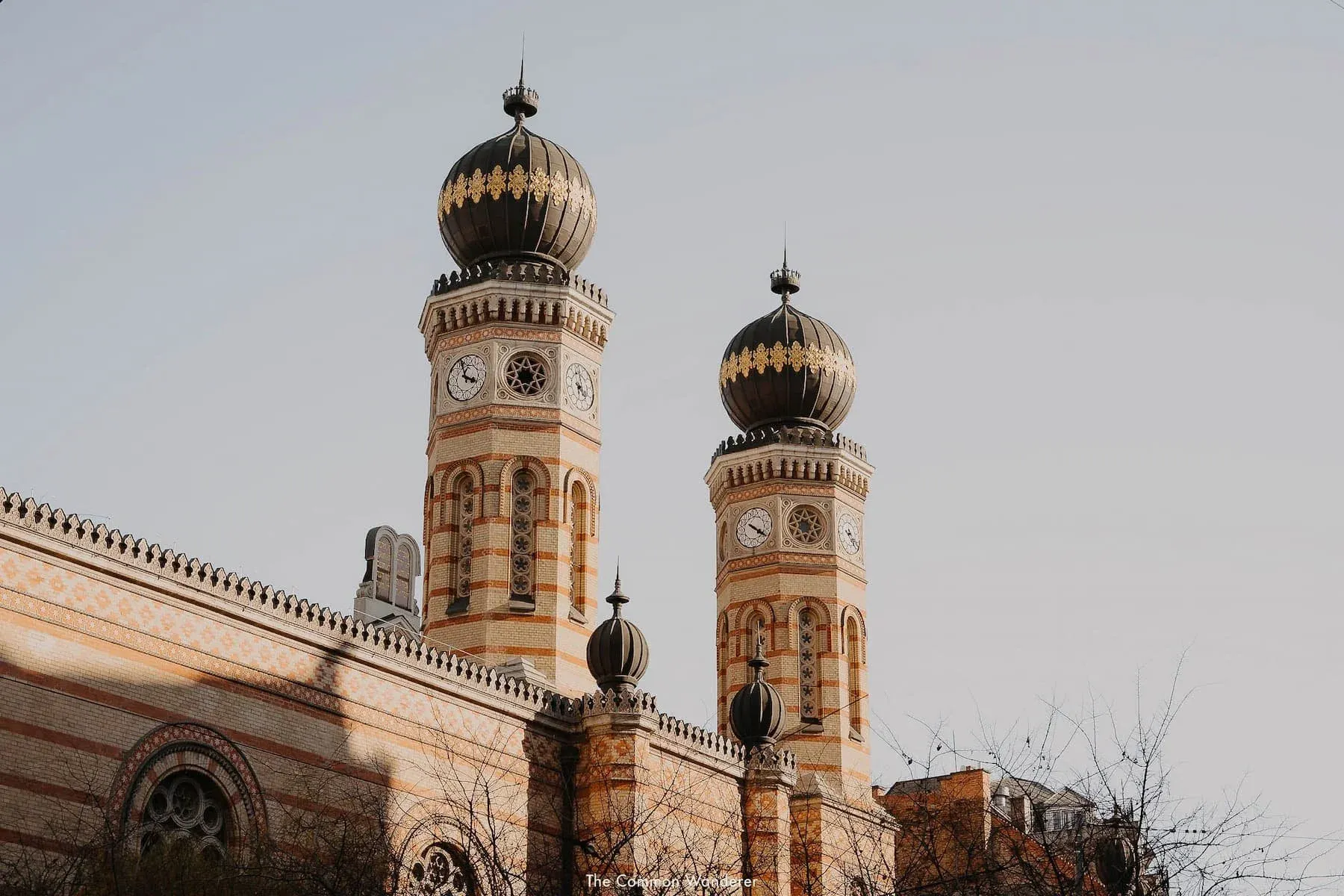
The Great Synagogue is frequently described in one label, but the building is richer than any single stylistic tag.
Exterior Grammar
- Vertical anchors: the twin towers establish identity from distance.
- Horizontal cadence: striped surfaces organize visual movement.
- Entry emphasis: the threshold frames a civic and sacred transition.
Interior Logic
- Volume first, detail second.
- Repetition creates coherence.
- Ornament marks hierarchy.
Visual Reading Grid
| Element | What to look for | Question |
|---|---|---|
| Arches | Repetition and scale shifts | Where does rhythm accelerate? |
| Color | Warm vs dark contrast | Which zones draw your eye first? |
| Lighting | Natural and artificial layers | How does mood change over time? |
Mini Comparison Exercise
Visit once from the square and once from the side approach. Note how massing and symmetry read differently by angle.
Architecture here is both representation and instruction: it tells you where to stand, where to look, and when to slow down.
著者について

Budapest Heritage Editor
このガイドは、チェックリスト的な立ち寄りを超えて、ドハーニ街シナゴーグを深く理解したい旅行者のために書かれています。実用性と歴史への感受性を両立させ、背景を踏まえた敬意ある訪問につなげることが目的です。
Tags
Architecture
Design
Moorish Revival
Budapest
Dohany
Comments (0)
Leave a Comment
Loading comments...